
Destroying the Kinetic Chain
Learn how the kinetic chain generates power in fastpitch softball and why proper energy transfer is essential for velocity.
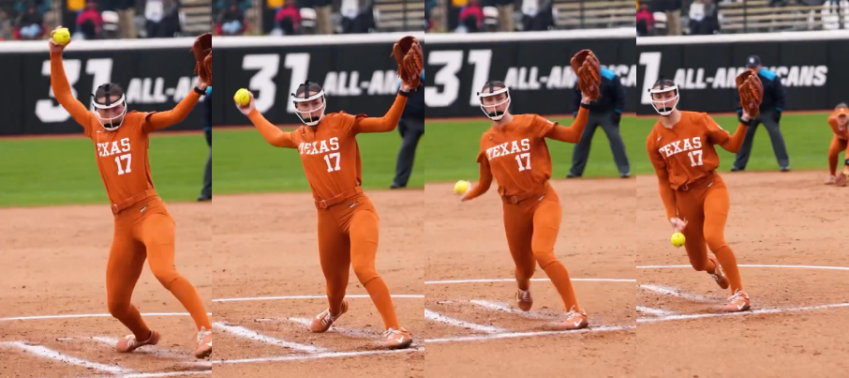
It's a bold title, but it raises an important question:
What exactly is the kinetic chain, and why does it matter so much?
Without getting overly technical, we can think of the kinetic chain as a sequence of connected movements, where each segment transfers energy to the next. In other words, it's a chain reaction.
This sequence is essential for generating power in what's known as rotational sports—sports where the coordinated rotation of the hips and shoulders plays a fundamental role in producing force.
Baseball, fastpitch softball, golf, football, javelin, discus, boxing, and tennis all rely on the kinetic chain to generate speed and power.
To understand how it works, we need to go back to one of the most fundamental concepts in physics: Newton's Third Law of Motion, which states:
For every action, there is an equal and opposite reaction.
When pitchers plant their stride foot, they push against the ground. The ground responds by pushing back with an equal force in the opposite direction. That returning force—known as the ground reaction force—is what ultimately powers the pitch.
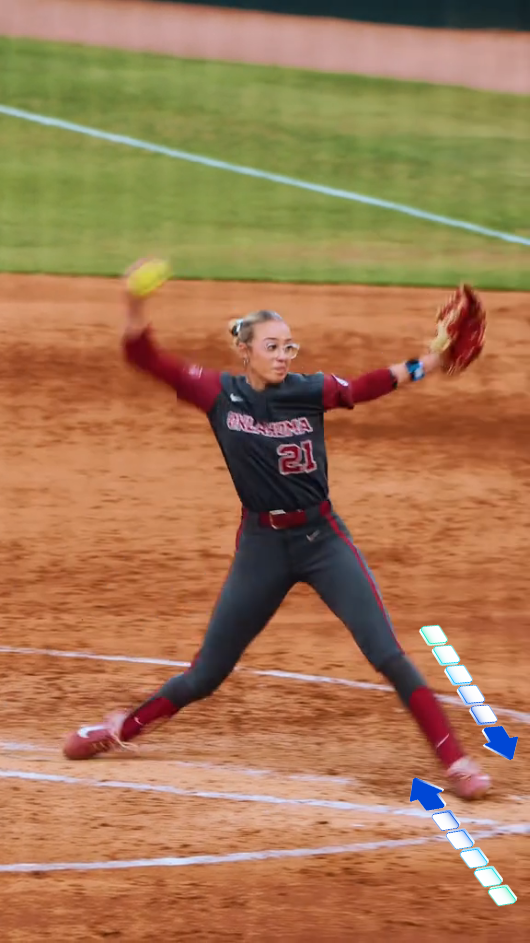
From that moment on, the kinetic chain begins to work in a very specific order.
- The stride leg receives the ground reaction force.
- The front side firms up as the lead leg blocks.
- The hips rotate into a firm blocking position (typically around 45°, neither completely open nor completely square).
- The energy transfers through the torso.
- From there it moves into the throwing shoulder.
- Finally, it flows through the arm in a proximal-to-distal sequence: elbow, wrist, and ultimately the fingertips at ball release.
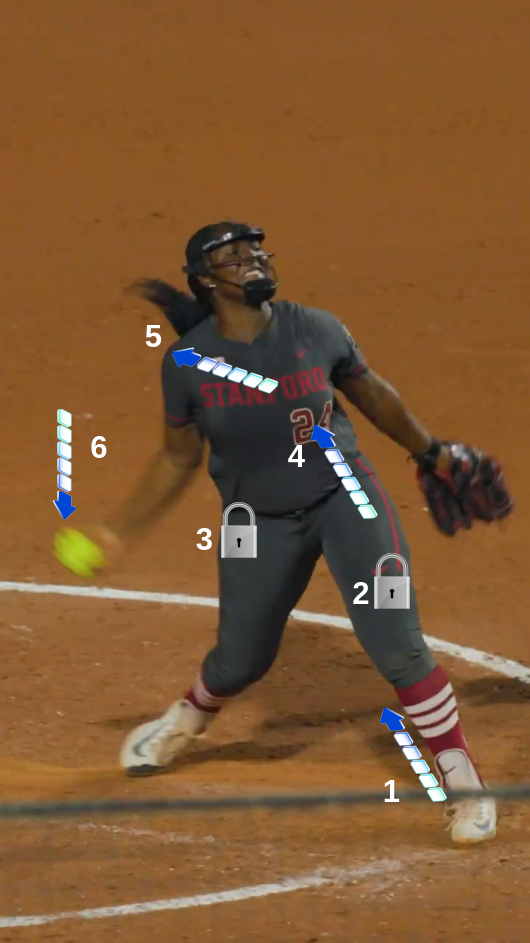
Understanding this sequence allows us to draw several important conclusions about efficient pitching mechanics.
- Powerful pitches begin with effective lower-body mechanics.
- A strong, stable core is essential for transferring energy efficiently.
- Every elite pitcher blocks the front side before releasing the ball.
- The throwing arm must remain loose and relaxed so it can accelerate naturally instead of being forced through the motion.
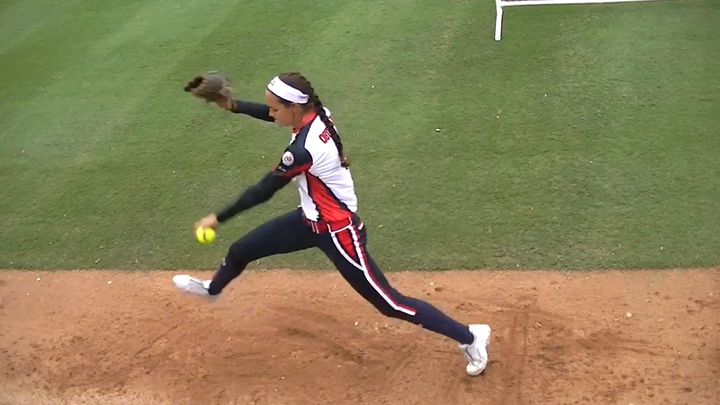
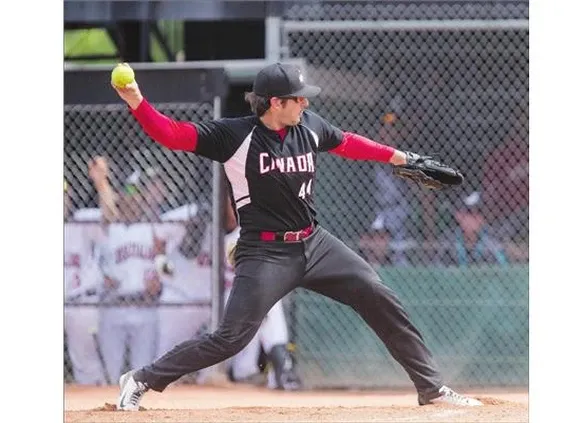
Marco Díaz makes excellent use of the kinetic chain, which explains the velocity he generates on his pitches.
Unfortunately, one of the most common teaching models—particularly in Argentina, and perhaps in other countries as well—has traditionally instructed pitchers to keep the hips completely open until after ball release so they don't "interfere" with the arm circle. At the same time, the arm is expected to remain fully extended with the palm facing downward.
When pitchers attempt to throw this way, they disrupt the kinetic chain.
Keeping the hips from blocking prevents the energy generated by the legs from transferring efficiently through the body. At the same time, maintaining the arm in internal rotation throughout the downswing eliminates the rapid shoulder internal rotation that occurs immediately before release in elite pitchers—one of the key contributors to an effective whip.
The result is a pitching motion that sacrifices both efficiency and velocity.
Then why are there so many outstanding Argentine pitchers? The answer is actually quite simple:
Because they don't pitch the way they're often taught.
Virtually every elite Argentine pitcher naturally preserves the kinetic chain during competition. Their hips begin to block before release, and their arm action follows an Internal Rotation pattern, regardless of how the mechanics may have been described during instruction.
It's a classic case of:
"Watch what I do, not what I say."
Today, the available evidence is extensive. Slow-motion video, high-speed photography, and biomechanical research consistently show the same movement patterns among the world's best pitchers.

Wondering whether your mechanics are making the most of the kinetic chain?
If you'd like a detailed analysis of your pitching mechanics, click the WhatsApp button and send me a message.

Comments ()