
Is Pitching a Lateral Linear Action?
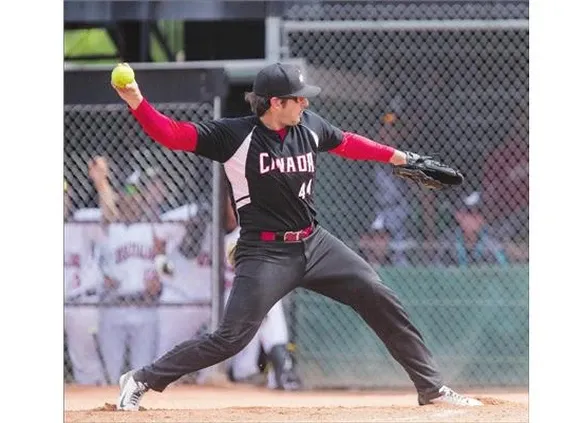
When we say “you learn something new every day,” it may sound cliché or overused, but it’s overwhelmingly true.
If in the United States — with all the access they have to information, research, and technology — there is still debate between two different pitching models, then it’s not surprising that in Argentina, and Latin America in general, we also have those discrepancies.
And this is where new ideas and that dichotomy come together.
Recently I heard a phrase that was new to me:
“In softball, pitching is a lateral linear action.”
A statement that reinforces the idea of “releasing the ball with the body completely sideways.”
That statement raises two questions for me:
- Can a softball pitch really be reduced to only that action?
- Is that position, by itself, truly a “power position”?
To answer those questions, we first need to define what a Lateral Linear Action actually is.
Definition
In sports, a lateral linear action is a movement performed in a straight line but toward the sides of the body — meaning left to right or right to left — without significant forward or backward displacement.
Breaking it down simply
- Linear action → the movement follows a straight path
- Lateral → that path moves sideways (frontal plane)
Clear examples in sports
Defensive movement (basketball)
A player moves laterally while maintaining position, like a defender sliding to stay in front of an opponent. They are not running forward; they are moving side to side.
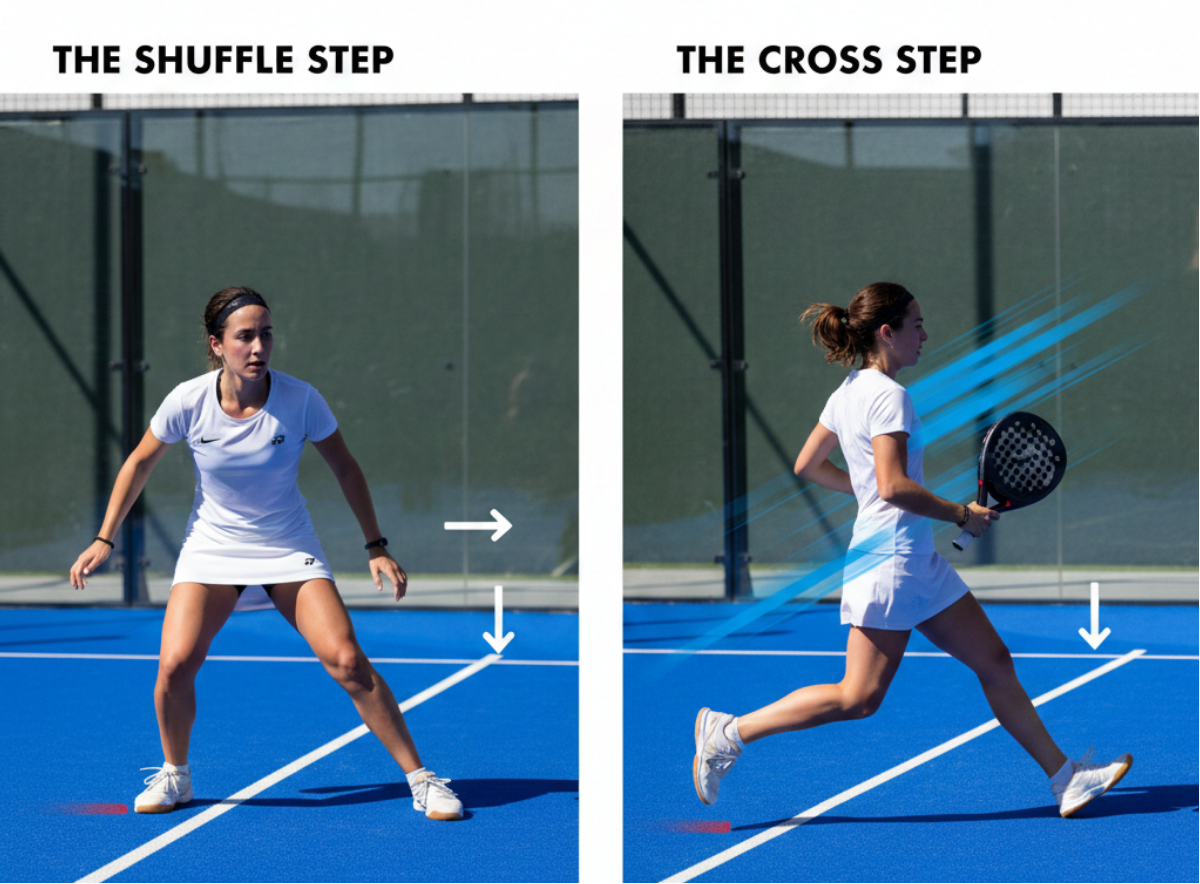
Positioning adjustments (tennis, padel)
The athlete takes small lateral steps to better position themselves for the ball.
Infield movement (baseball/softball)
An infielder moves to the right or left to intercept a ground ball.

Biomechanical key point
This type of action mainly occurs in the frontal plane and is fundamental for:
- defense
- reaction
- changes of direction
Difference from other types of movement
- Frontal linear → forward or backward movement (example: sprinting)
- Rotational → involves rotation (example: a swing or a throw)
- Multidirectional → combines multiple movement patterns (example: team sports)
A lateral linear action is not the primary gesture of pitching, but it is a hidden foundation that allows proper hip-to-shoulder separation to happen.
Open–Closed Convention
It is common to hear terms like “open shoulders” or “closed hips.”
There is no universal consensus on when the body is considered open or closed. Each author or coach tends to define those terms differently.
Personally, I describe the body as “closed” when the pitcher is facing the catcher directly, and “open” when the body is sideways, parallel to the throwing line.
I prefer that convention because it is easier to explain to younger athletes that the pitcher “opens up” in the air and gradually “closes” as the movement progresses.
What is separation?
In softball pitching, hip-to-shoulder separation occurs when:
- the hips have already started closing
- while the shoulders are still relatively “open” (sideways)
This creates a “spring effect” (elastic energy) that is later released through the arm.
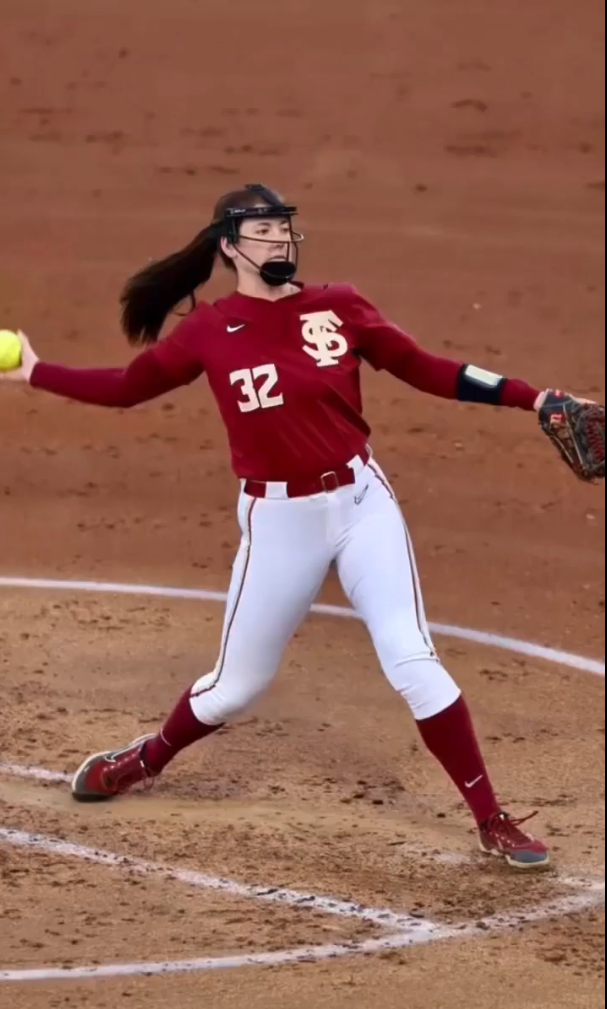
Where does the lateral component come in?
Stride and center-of-mass displacement
As the pitcher moves forward:
- the body does not travel perfectly straight like a train on tracks
- there is an important lateral component in how the body moves and stabilizes
That small lateral component:
- helps maintain balance
- allows the hips to lead the movement
- prevents the shoulders from closing too early
Frontal plane stability
Separation depends heavily on:
- lateral pelvic control
- stability of the drive/support leg
- avoiding “falling” to one side
Without proper lateral control:
- the hips fail to close correctly → the sequence breaks down
- or the shoulders close together with the hips → there is no separation
In other words
- Separation is not just rotation
- It's a combination of:
- translation (forward movement)
- rotation (hips vs. shoulders)
- lateral control (balance and alignment)
Typical mistakes (very common in inexperienced pitchers)
- Opening sideways too early
- Trying to move in an excessively rigid straight line
Both mistakes disrupt separation:
- too much lateral movement → energy loss
- zero lateral movement → stiffness, hips and shoulders close simultaneously
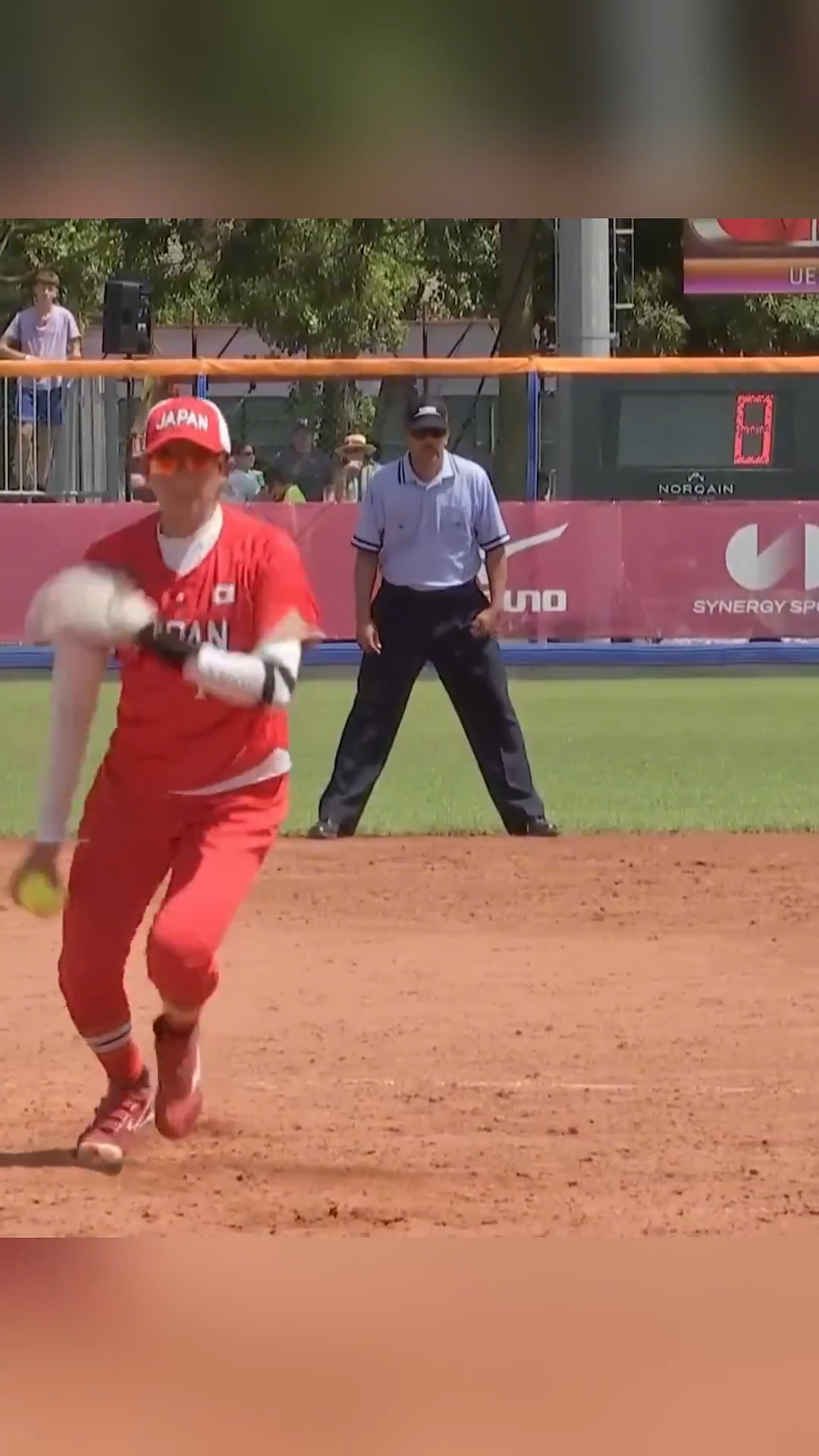
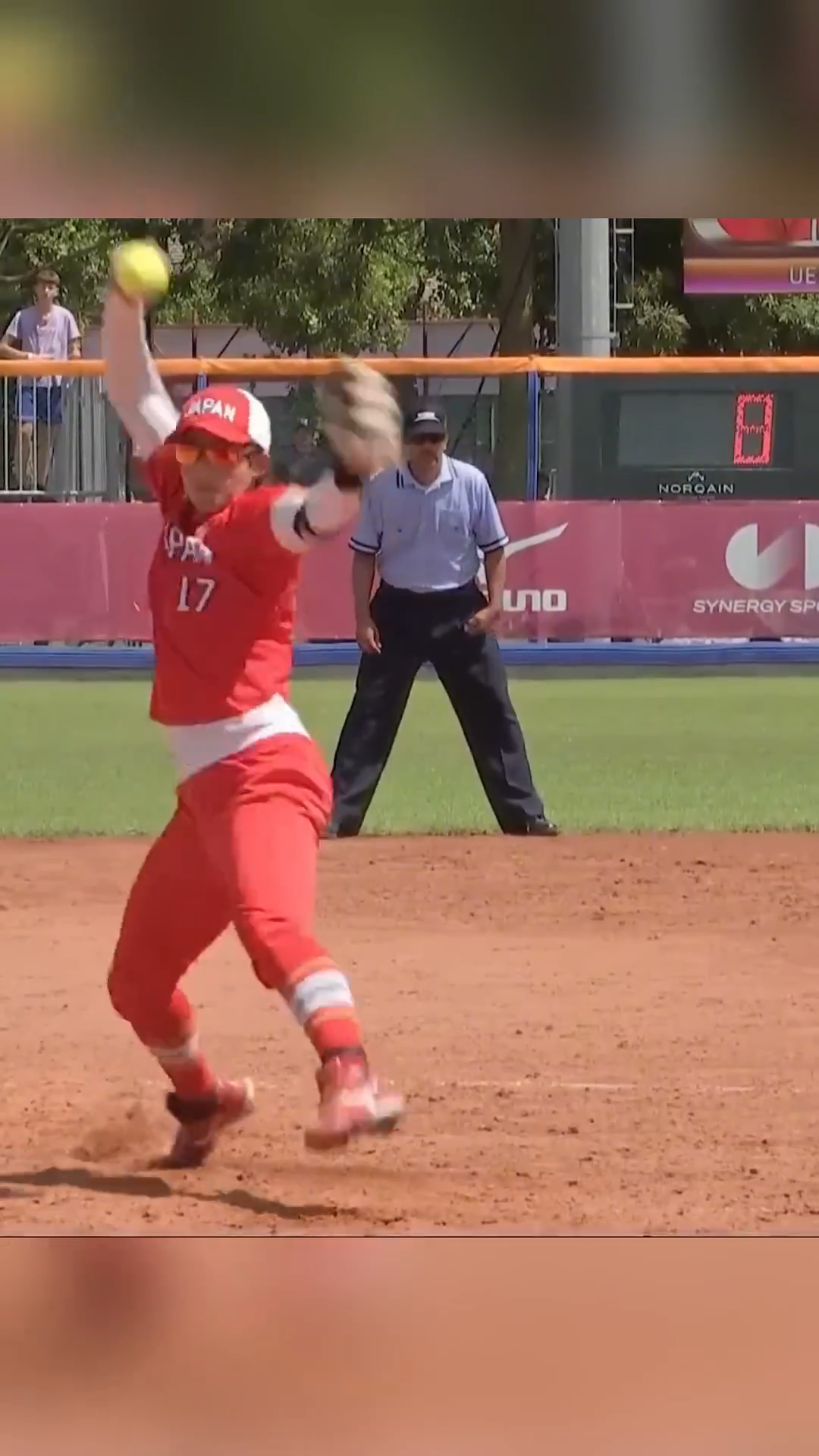
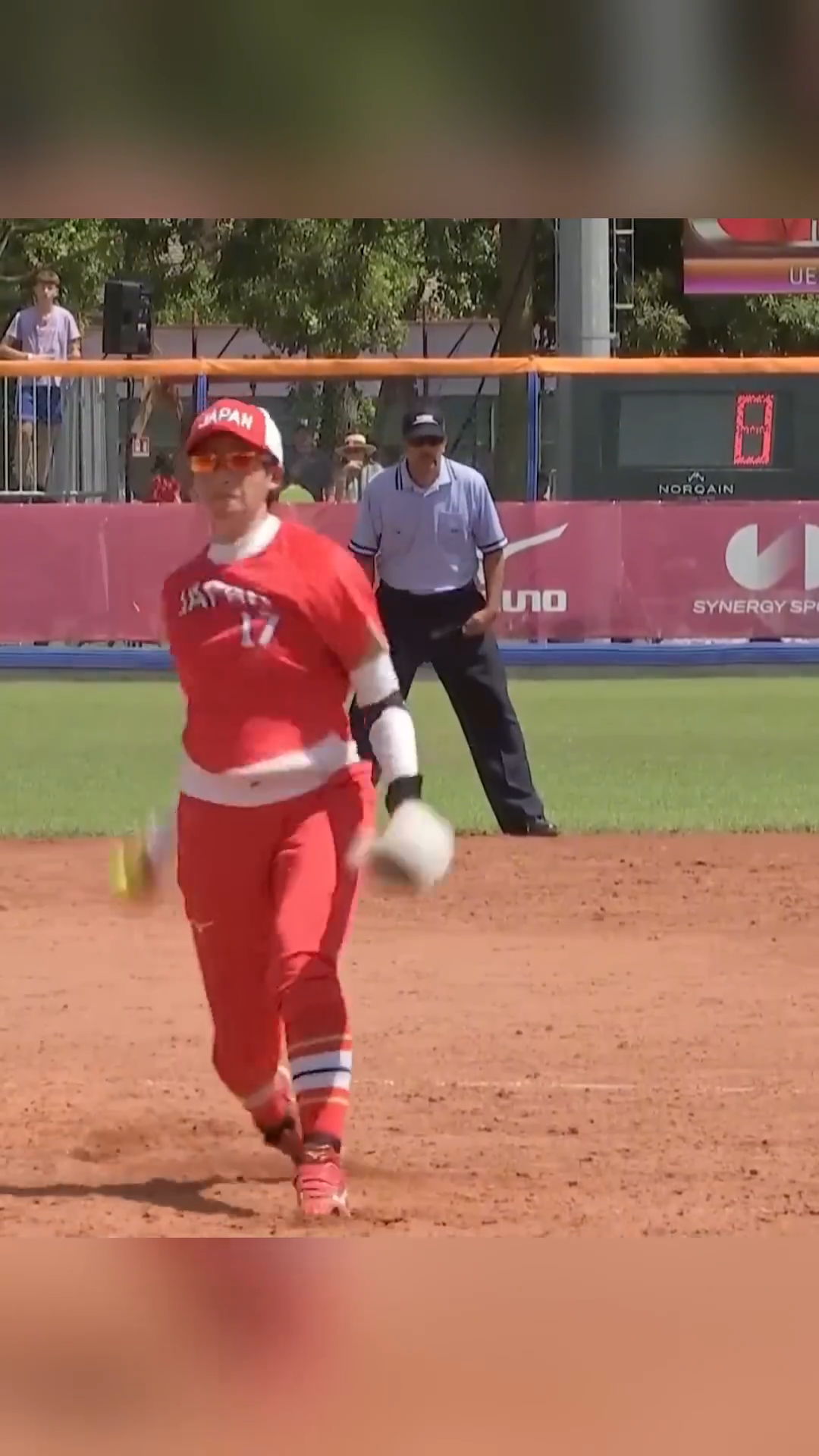
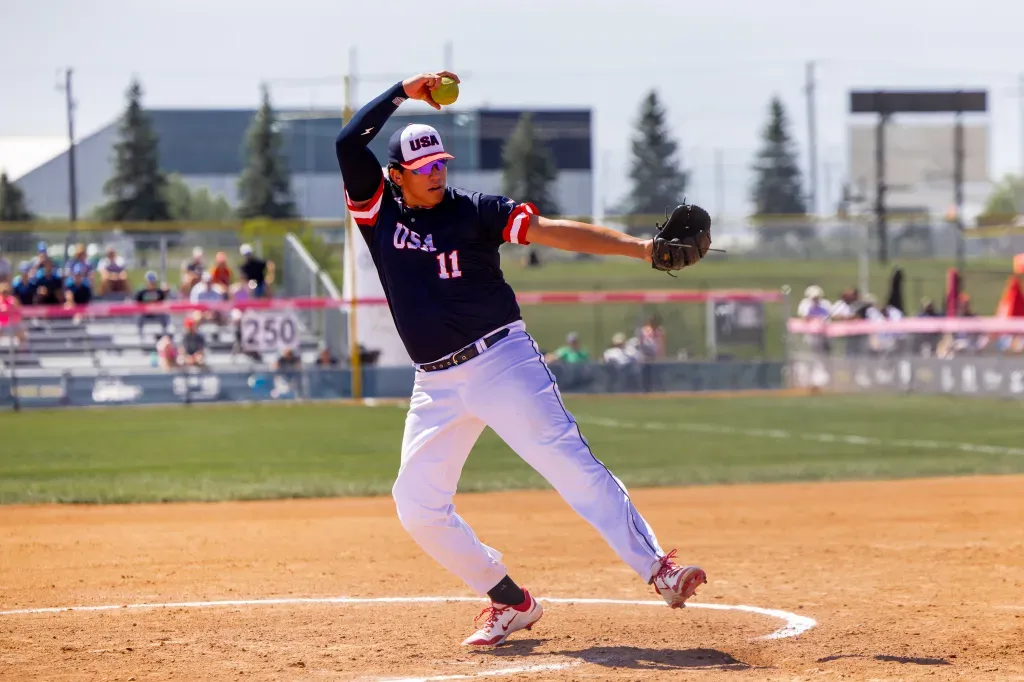
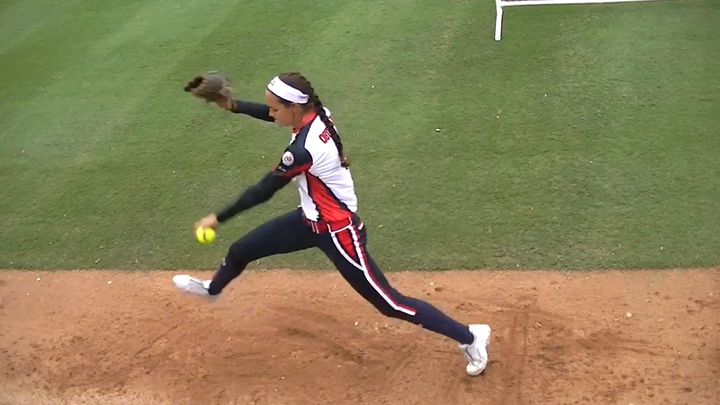
Yukiko Ueno begins opening the hips very early. But… does she throw facing forward or sideways?
Key idea
The lateral action by itself does not create separation, but it makes separation possible and efficient.
Lateral action does not work in isolation. It must integrate with forward movement and with the rotational sequence of the pitch.
It is very easy to unconsciously fall into the oversimplification of teaching static positions such as “throw sideways” or “throw facing forward.”
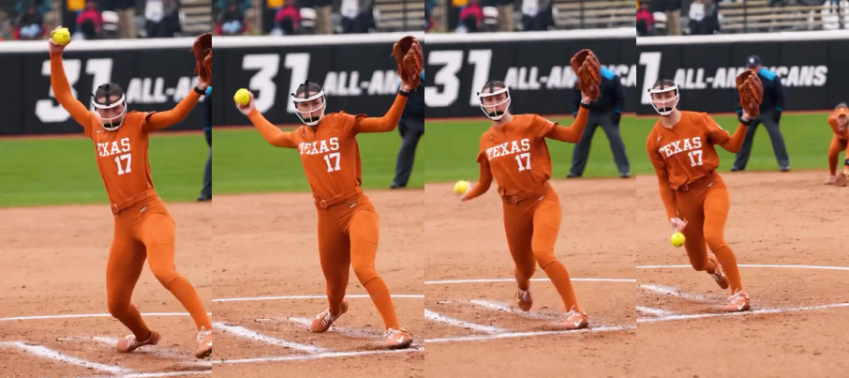
Pitchers move through different phases during the motion.
So… should pitchers throw facing forward?
Personally, I think it is important to clarify that I do not teach athletes to “throw sideways” (meaning keeping the body completely sideways at release), nor do I teach them to “throw facing forward” (meaning being completely square at release).
I simply do not teach pitching in those terms.
Those are only isolated moments within a much more complex movement whose primary objective is achieving mechanical efficiency that ultimately leads to greater control and velocity.
Conclusion
Pitching is not simply a lateral linear action.
The pitching motion is made up of multiple mechanics, and one of them is lateral linear action.
That action is fundamental for generating power, but reducing pitching exclusively to it directly works against sound mechanics because it eliminates the other elements that are part of the kinetic chain.

Comments ()