
Analyzing Lyndsey Grein's Mechanics

Versión en español disponible aquí
In recent days, my students showed me videos of this pitcher from the University of Oregon (go Ducks!) who plays in Division I, the highest level of NCAA college softball. Her radar gun readings show an interesting velocity: 63–67 mph. Moreover, she boasts excellent stats and a tremendous attitude in the pitcher's circle:
2026 Season Statistics (As of April 29, 2026):
- Record: 23-3
- ERA: 2.15
- Appearances: 39
- Innings Pitched: 143.1
- Strikeouts: 190 (Leader in her conference)
If you haven’t read any of my analyses or those of other colleagues, it’s worth clarifying the key points I generally focus on, always based on the “Internal Rotation” technique, which itself is grounded in biomechanical research:
- Load: How does she initiate the movement? Does she start from a position that allows her to generate effective momentum?
- Drive/Impulse: Does she launch from a sound position? Does she generate strong forward drive?
- Triple Extension: Does she properly extend her pivot leg? This is a crucial element in the initial propulsion phase.
- Landing: What position is her hand in when her front foot makes contact with the ground?
- Stack Position: Does she achieve vertical alignment of her back knee, hip, and throwing shoulder along a single straight line?
- Release: What position are her hips in at the moment of ball release? What about her hand position?
- Arm Rotation: How does her arm rotate? Does she execute proper internal rotation?
Load
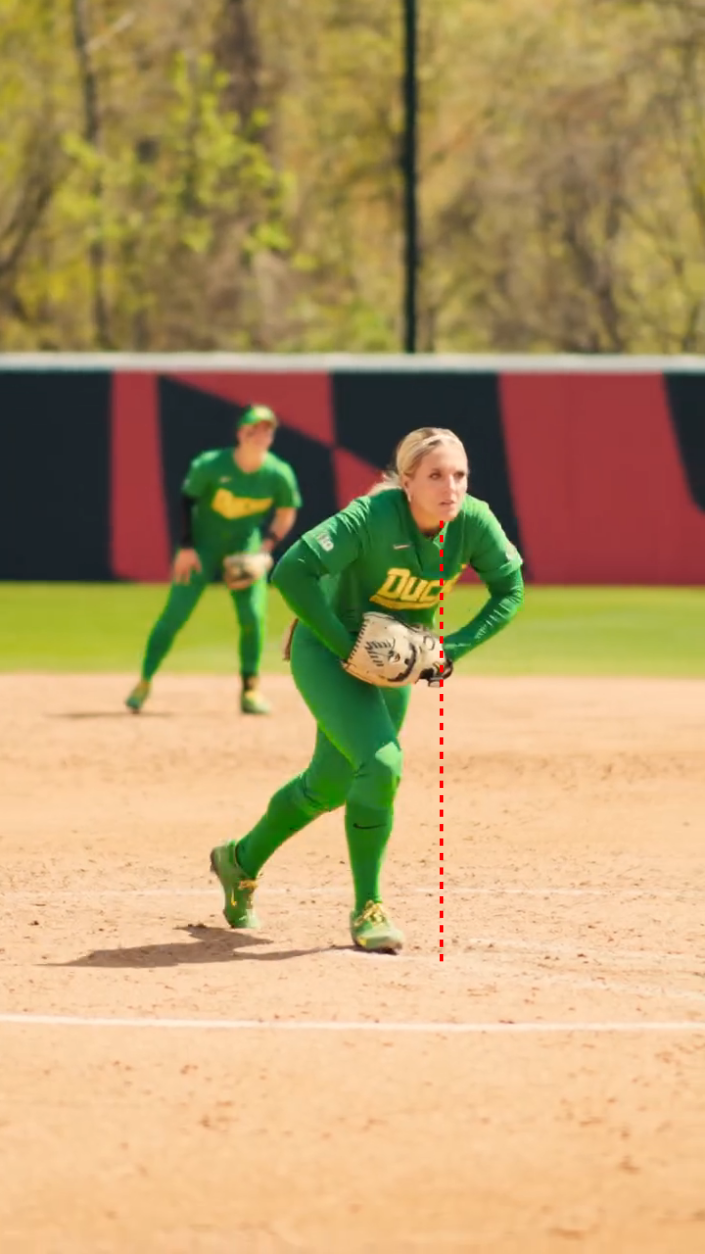
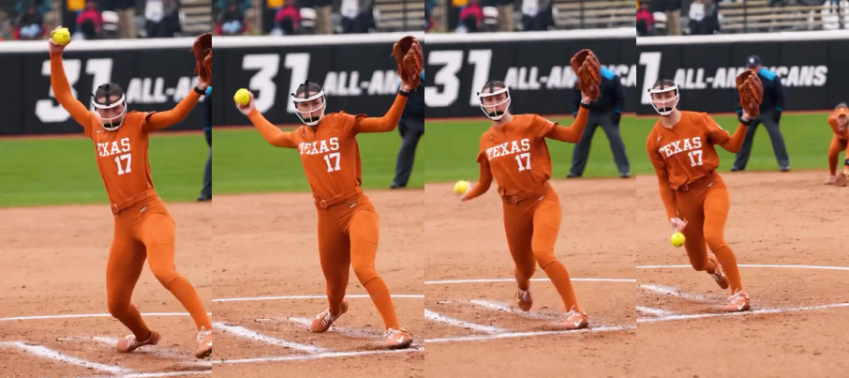
She initiates the motion with her weight shifted onto the pivot foot. The knee is well-flexed and her chin is past the toe. This is very good.
Drive
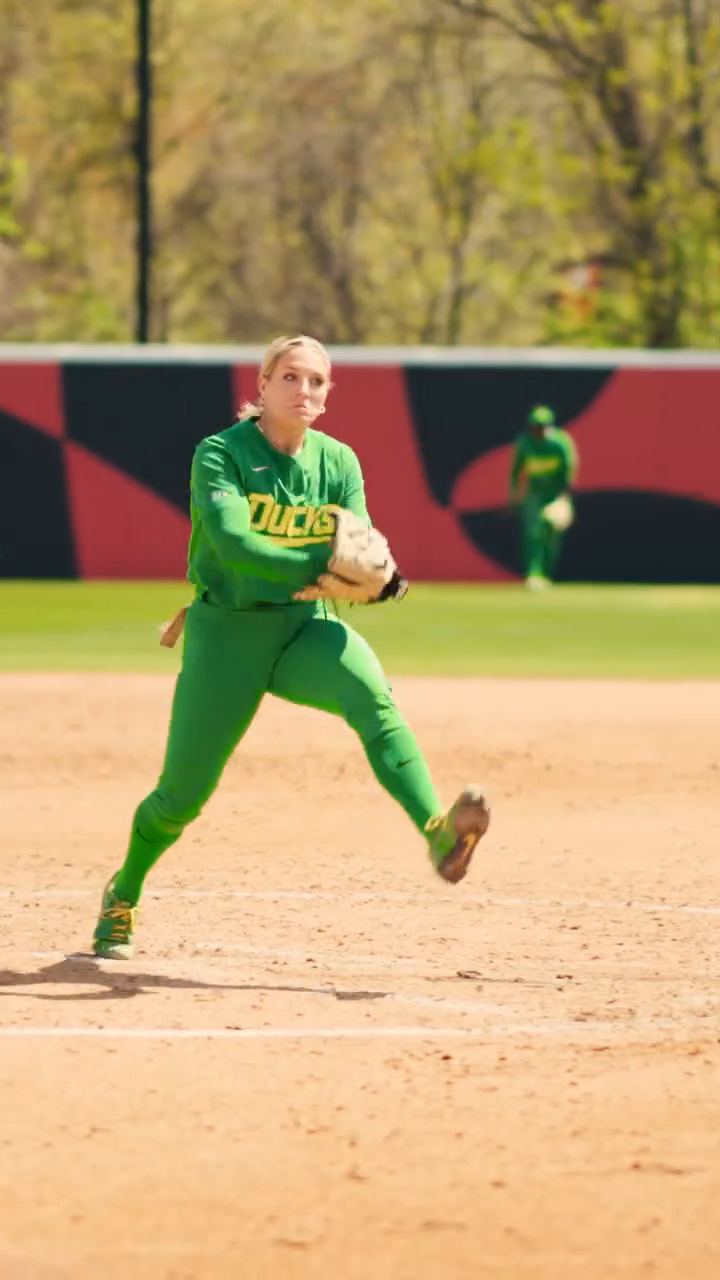
Strong initiation of the drive. The stride foot is reaching for distance, the hip is ahead, and both shoulders are squared toward home plate.
Triple extension
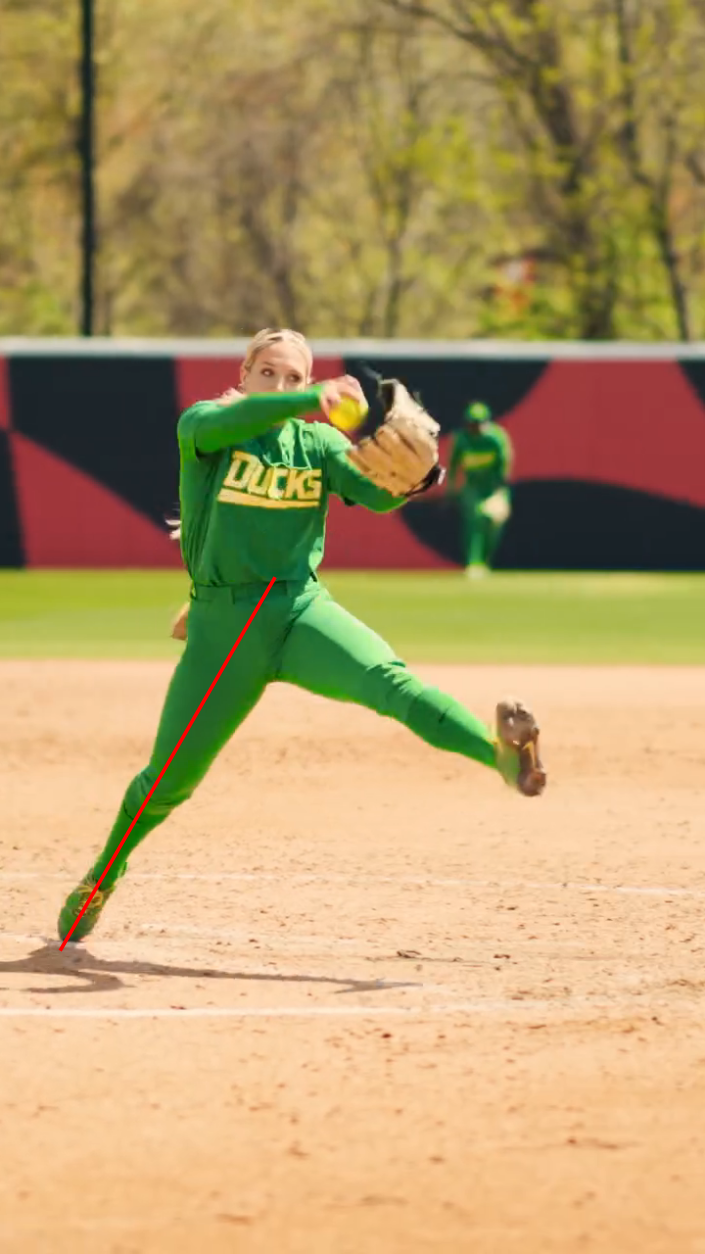
She achieves a solid triple extension. In other words, the ankle, knee, and hip of the pivot leg extend simultaneously.
Landing
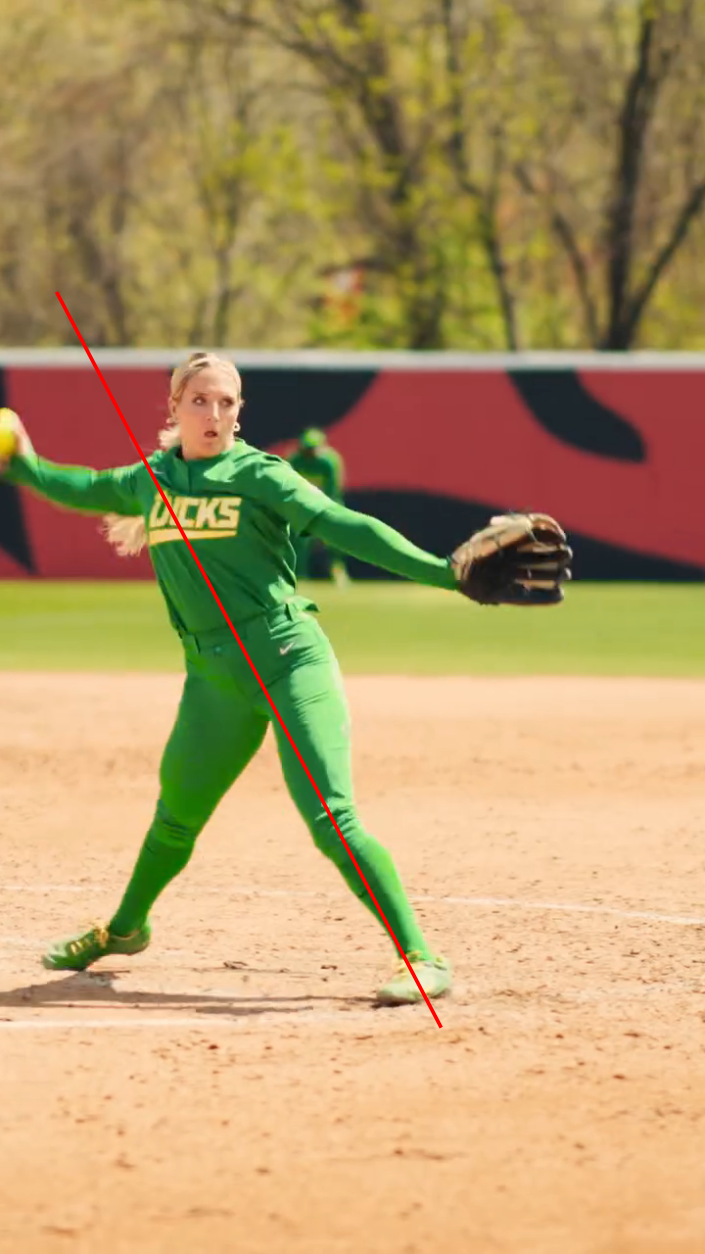
Shoulders are well-aligned. Clearly, the arm follows internal rotation mechanics, but it’s a bit too far forward. It should be closer to the red line. Why? Because from the moment the front foot contacts the ground, power generation begins and maximum arm acceleration is initiated. If the throwing hand is too far ahead in the rotation, it loses optimal path length, resulting in less accumulated acceleration, and there’s a risk the hand reaches the release point too early, leading to control issues. The front foot is overly crossed. Ideally, it should be at a 45-degree angle relative to the imaginary line connecting the pitcher’s rubber to home plate. Her back leg is completely extended; ideally, it should begin to flex at this point.
Posición stack
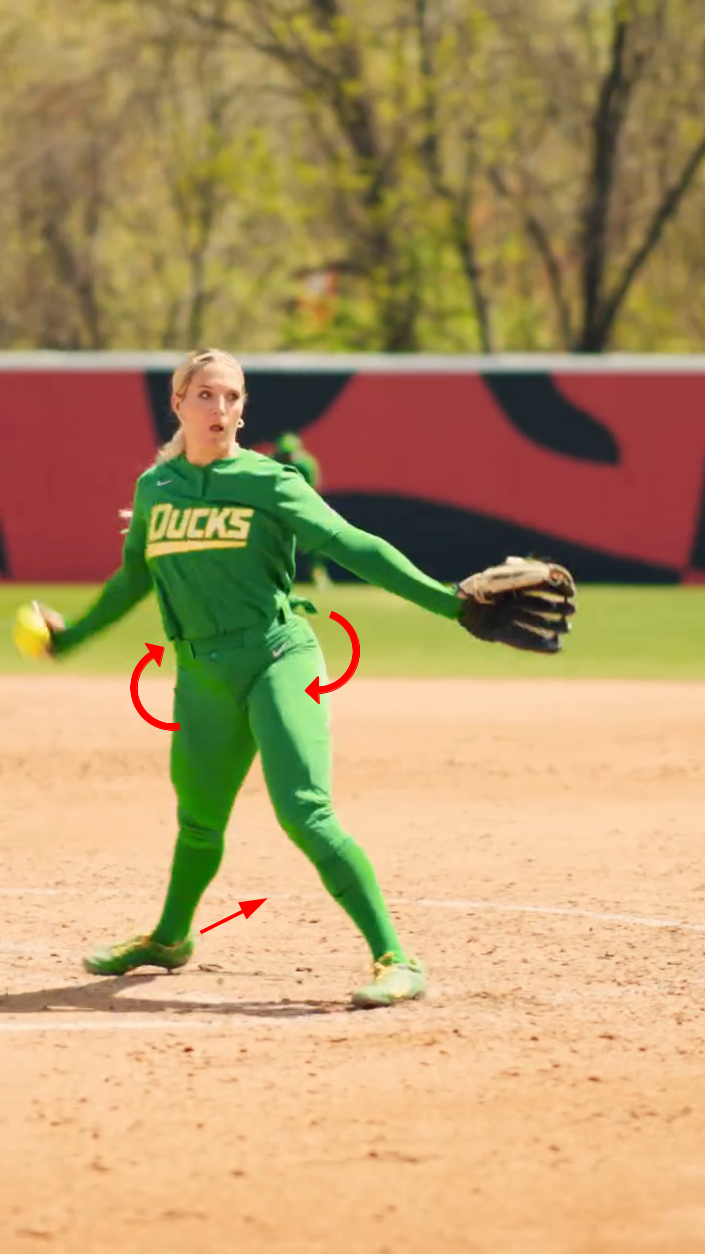
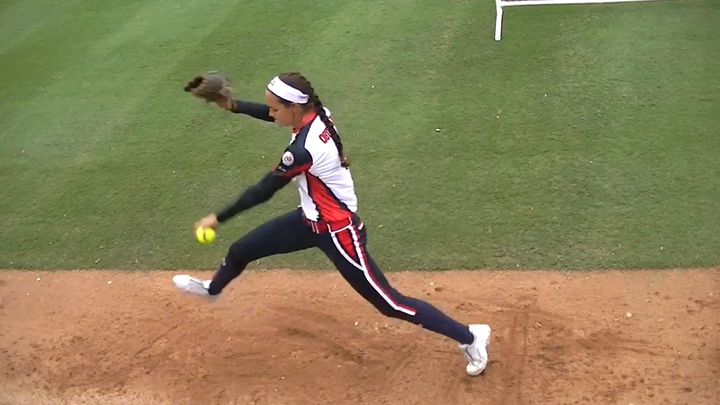
Her right leg remains fully extended while her left is semi-flexed. Her stacked alignment isn’t correct. Additionally, we can see her back leg rotating clockwise, when it should be rotating in the opposite direction. This prevents her hip from advancing properly to block in the correct position. Her hand is at 9 o’clock with the palm facing up. Her hips are still turned sideways.
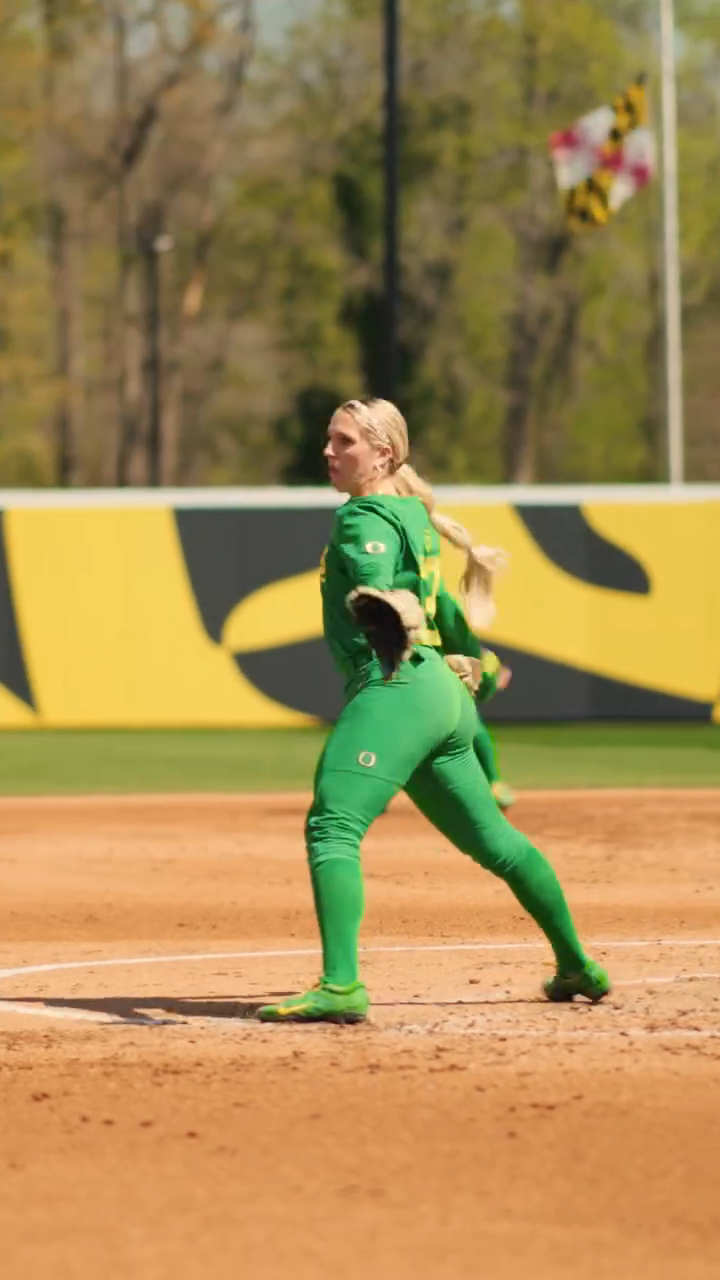
The back leg is fully straightened. Her right leg should be flexed to allow the knee, hip, and shoulders to align along a single vertical line.
Hip lock
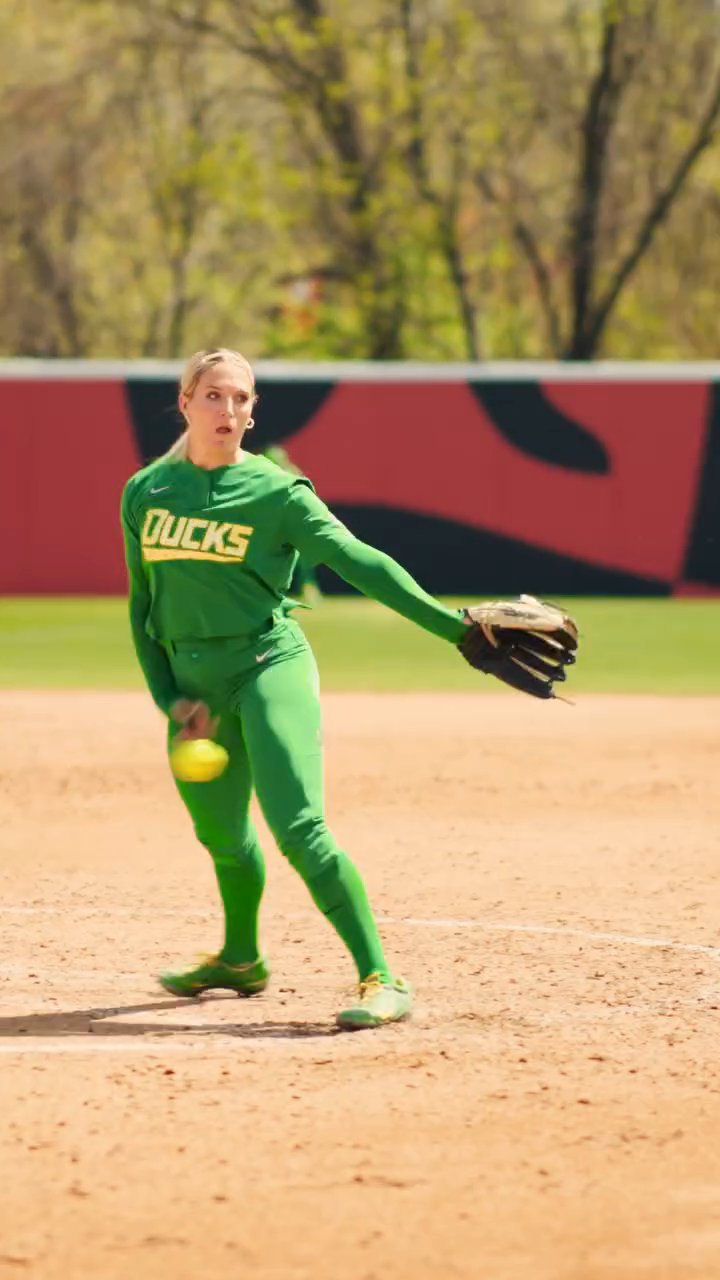
She locks her hips while still turned sideways, and her arm brushes past her body at release. Her right leg is pushed too far backward.
Followthrough
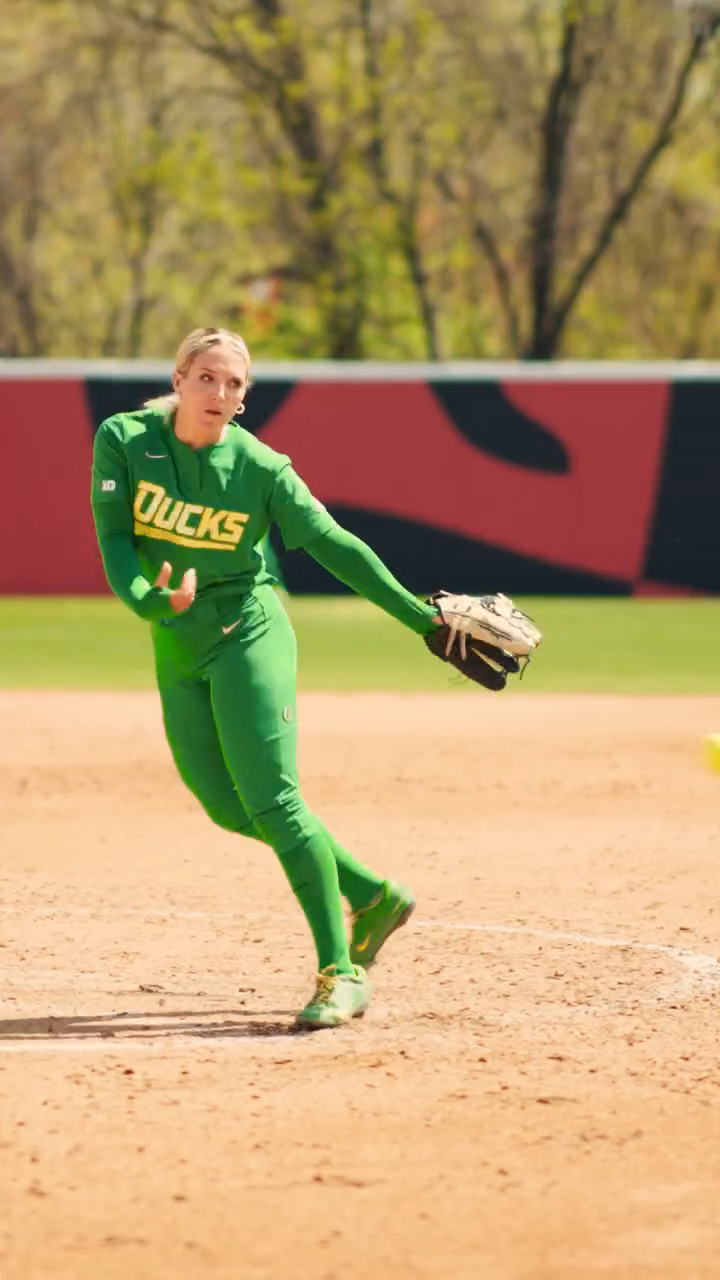
After releasing the ball, her arm finishes loose. What stands out is the position of her shoulders. Even though the ball has already been released and subsequent body movements won’t affect its trajectory, the fact that her throwing shoulder is so elevated indicates unnecessary tension, which compromises the explosiveness of the pitch.
Final Thoughts
Lyndsey Grein is an exceptional case who, despite some technical flaws at key moments, still delivers strong performance in the pitcher’s circle. This leaves an open question that’s difficult to answer without knowing her training background: whether this type of mechanics is an individual adaptation or the result of a specific coaching model.
In either case, the core question remains the same: How does this movement align with the principles that explain energy generation and transfer in pitching?
In my experience as a pitching instructor, I’ve only worked with one other pitcher with these exact mechanical flaws. The difference is, he didn’t achieve the same results as she does. Correcting it is extremely difficult, and frankly, I wasn’t able to. If we compare her mechanics to those of Monica Abbott or Román Godoy, for example, the differences are stark.
High-level performance often finds individual workarounds. But coaching cannot be built around exceptions. It must be grounded in principles that explain the movement and can be consistently applied over time. And when those principles repeatedly hold true in practice, they cease to be mere theory and become proven evidence.
For my students, I prefer to use pitchers like Marco Díaz, Jack Besgrove, Carly Hoover, and many others as models.

Comments ()